How to Talk to AI: (And How Not To)


"How to Talk to AI (And How Not To)" suggests that we humans have some thinking to do.
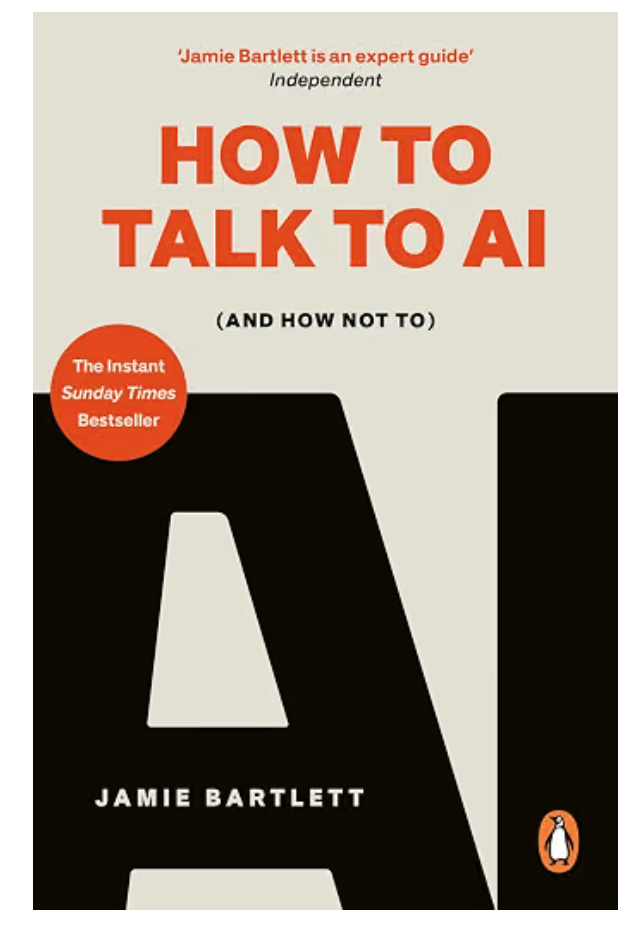
Jamie Bartlett's excellent book urges us to look at the impact of this new technology; beyond the simple promise of productivity gains.Through real case studies and sample prompts the author demonstrates the danger and the potential of AI.
1. Beware Entanglement. AI doesn't just answer your questions — it weaves itself into your narrative. Validates your half-formed theories. Mirrors your framing back at you.
2. Guard your sense of self. The real risk isn't bad information. It's slowly outsourcing your own judgement to something built to flatter you back at yourself on demand.
3. Prompting is everything. Specificity, roles, and context are key to ensuring a higher quality of output.This is why I've been sharing the model of CRAFT for prompting: Context, Role, Activity, Format, Tone.In the book Bartlett introduces
The ELIZA effect — the tendency to attribute understanding or sentience to a computer program based on its outputs, named after Joseph Weizenbaum's 1960s chatbot ELIZA.The danger then is that whilst AI isn't sentient, it does appear to assume a distinct personality.
The safest way to view that personality, suggest Bartlett, is as a talented but highly erratic intern.
We do need to learn how to 'talk' to AI, but we also need to learn what thoughts we should keep to ourselves.
#AI #thoughleadership
What good AI books would you recommend?