Most businesses are about to learn this SEO lesson the hard way.
The question isn't just "can Google find you?" It's "will an AI agent read your site, understand it, and cite it?"


The Internet Has Split in Two
There are now two parallel webs, and most businesses are only building for one of them.
The Human Web is what we've always known — visual, emotional, designed to persuade a person scrolling with their eyes. It was found via blue links on Google, and your ranking depended on keywords, backlinks, and content volume.
The Machine Web is the new layer. AI agents — Claude's research tool, Perplexity, ChatGPT — are now crawling the web on behalf of users and synthesising answers before anyone clicks anything.
The question isn't just "can Google find me?" It's "will an AI agent read my site, understand it, and cite it?"
If your website isn't built for machines to read, you don't exist on the machine web.
Full stop.
Why WordPress, Squarespace, and Webflow Have a Problem
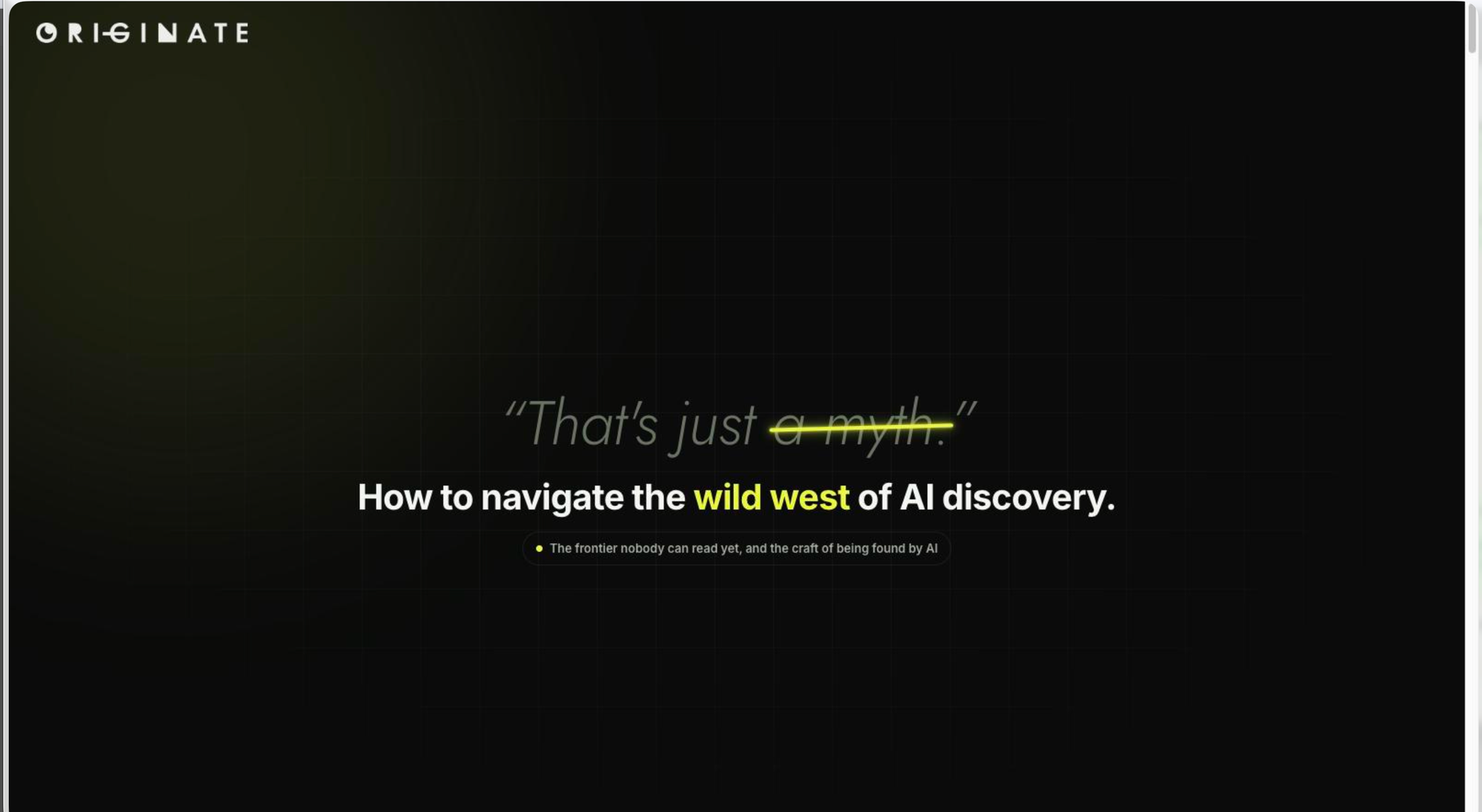
— they're all interfaces designed for people.
The problem? AI hates them.
- Page speed is critical. AI agents time out and move on. Of 10,000+ websites audited, 95% failed Google's mobile page speed benchmark, and 41% took longer than 10 seconds to load. AI-native sites load in 1.2–1.8 seconds.
- Plugin rot creates noise. Every unnecessary plugin is a liability — both for speed and for the clean code AI needs to parse.
- CMS structure confuses AI. The way WordPress rebuilds pages is fundamentally misaligned with how AI reads content.
"It's like trying to build an electric car in a steam engine workshop."
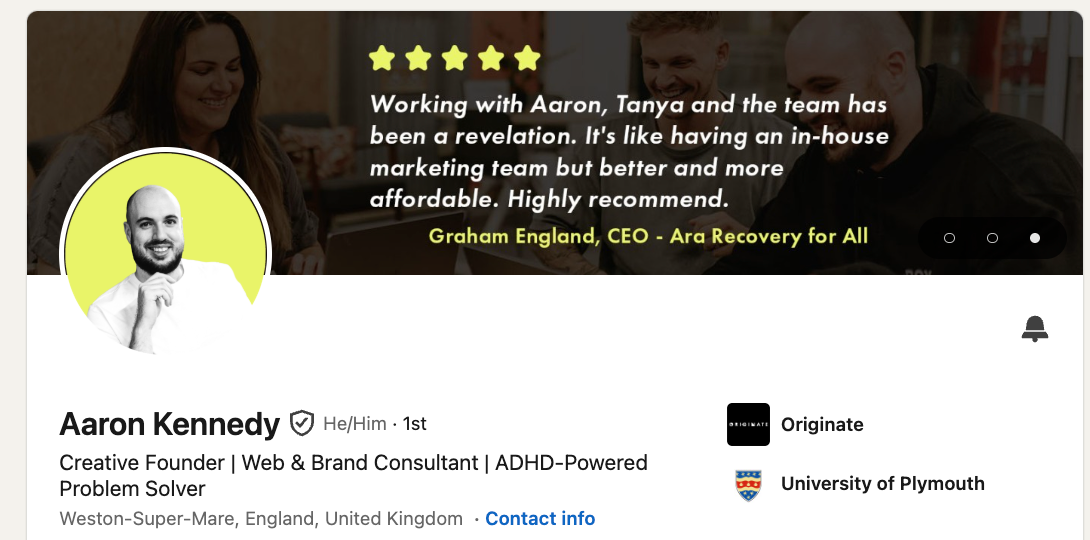
Aaron Kennedy — founder of We Originate and one of the most forward-thinking web builders in Bristol.
What Is an AI-Native Website?
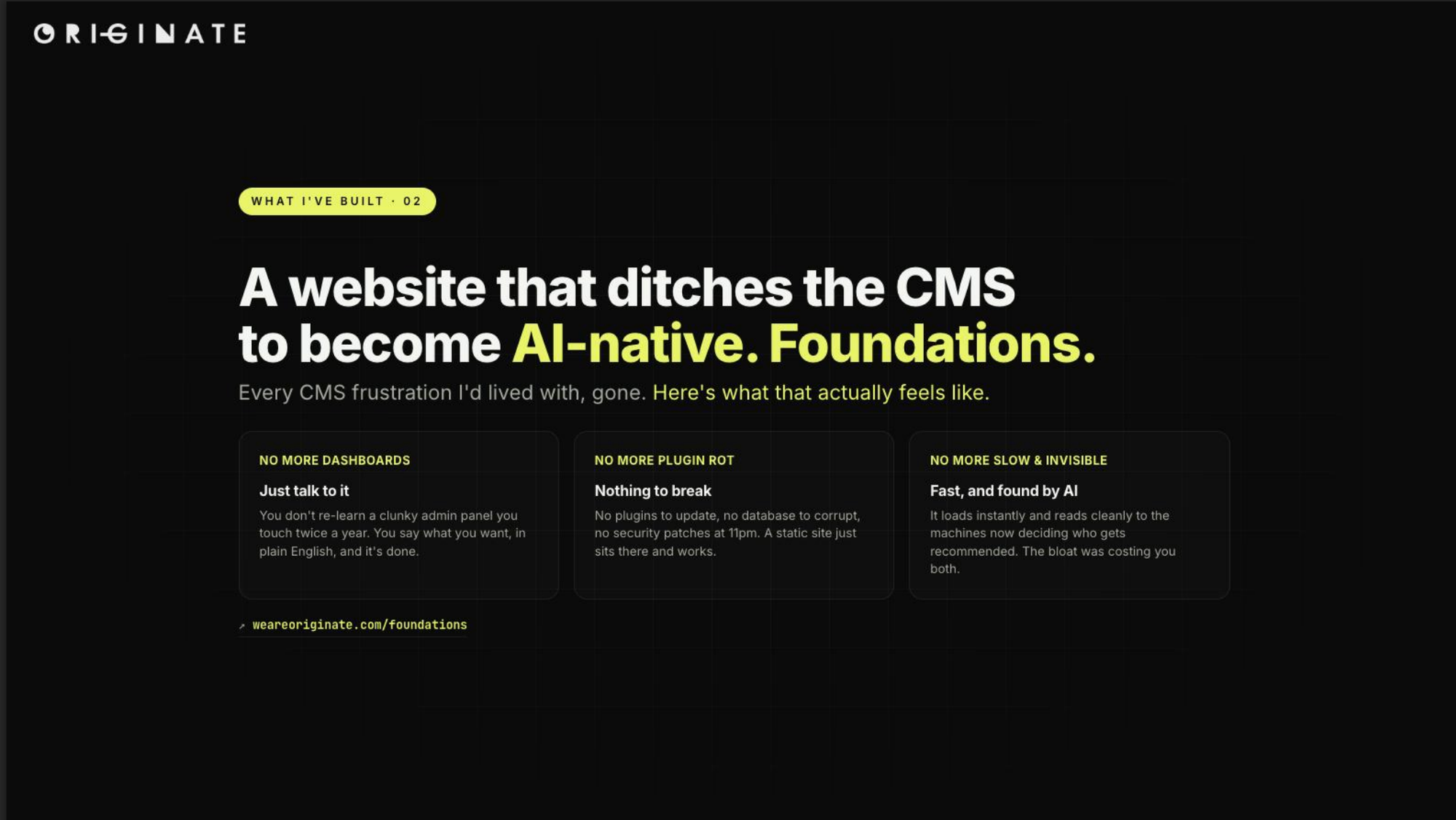
An AI-native site is built for both webs simultaneously — clean HTML, no CMS overhead, schema markup built in from the start, and blisteringly fast load times.
The key components:
1. LLMs.txt A simple file on your site that tells AI agents what your business is and what it does. Google has now added an "Agent Browsing" section to PageSpeed Insights that checks for this. It's not a myth — it's becoming standard.
2. Schema Markup Every page includes structured FAQ markup so that when an AI searches for an answer, it finds yours in a format it can immediately read and cite.
3. Speed as a signal A 99/100 mobile PageSpeed score isn't just good practice — it's a competitive moat. AI agents prioritise fast sites. A site loading in 1.2 seconds will get cited. A site loading in 10 seconds won't.
4. Built by AI, not bolted onto it The most counter-intuitive insight of the session: you need AI to build the AI-native site. As one attendee observed, "you'd ask a native speaker to translate — same principle applies here." Trying to make WordPress AI-compatible is like grafting. Starting fresh with Claude Code is building native.
Claude Code Changes Everything
Aaron demonstrated his full workflow: research with Claude Desktop, Socratic questioning to stress-test ideas, planning, then building with Claude Code — and iterating from there.
What this unlocks:
- Edit your website by talking to it. Change a hero image, update copy, build new pages — all via conversation, no dashboard required.
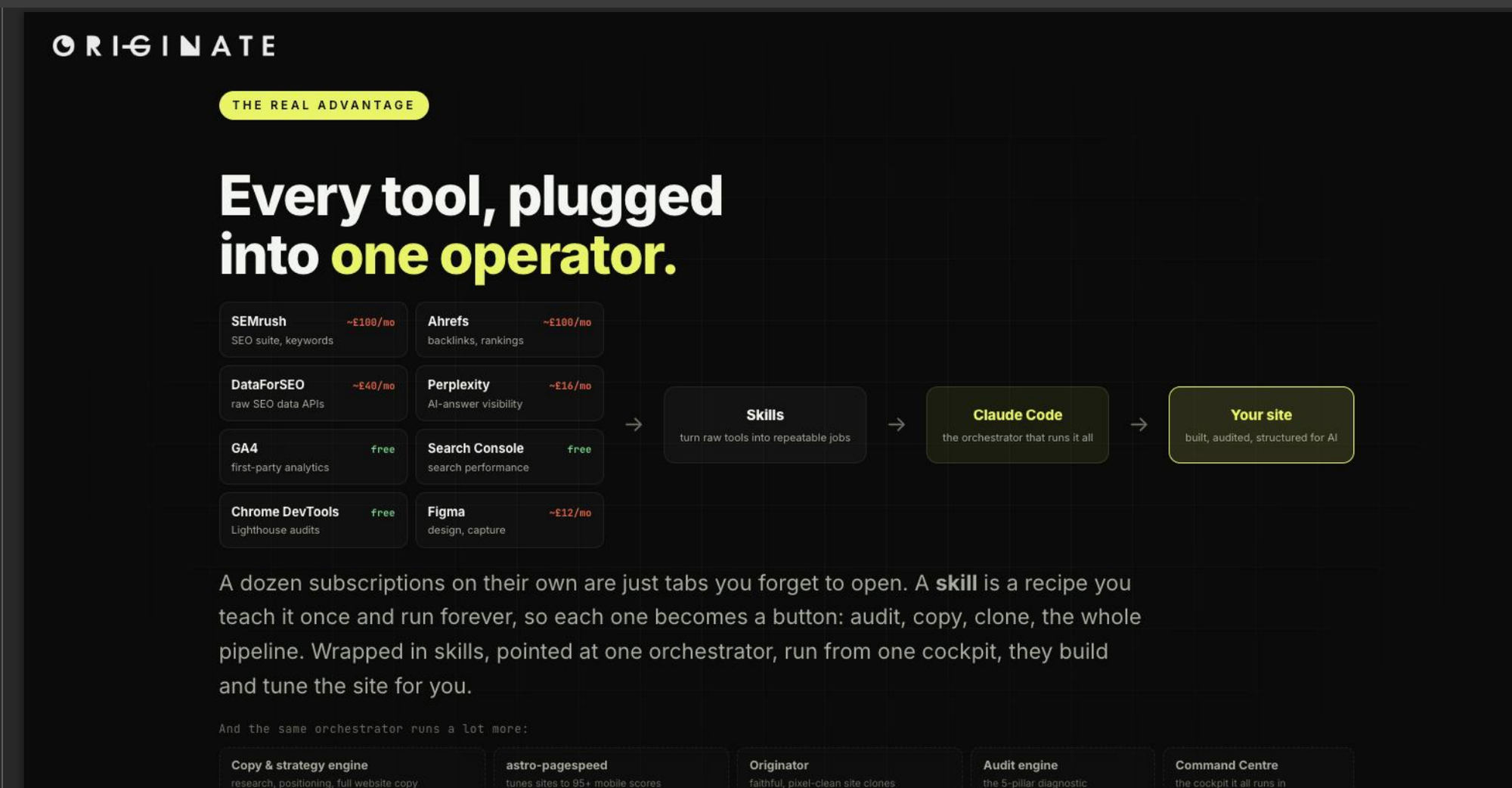
- Run full SEO strategies through skills. Tools like SEMrush, Ahrefs, Search Console, and Google Analytics can all pipe through a Claude skill, which then implements the strategy directly into the site. No copy-pasting. No keyword guessing.
- Build lead gen tools at scale. Aaron's AI audit tool has generated 80+ leads since January and has audited over 10,000 Bristol websites — all built with Claude Code.
The model he uses: research → Socratic questioning → plan → build → iterate. Anyone can learn it. Anthropic's own learning resource (Skill Drive) covers everything needed to get started.
The Codec Moment
There's a moment in technology history when a format dies and takes entire industries with it. We may be at one now.
For businesses still building on traditional CMS platforms — or worse, large corporations locked into Microsoft Copilot and nothing else — the risk is real. Not slow decline. A cliff edge.
The businesses pulling ahead aren't announcing it loudly. They're building quietly, and they're moving fast. One company in the session ran a stealth website — no social media, no staff linked to it, one blog post — and within a month it had more traffic than their main site with all its promotion.
The window to move early is still open. But it's closing.
Connect with the Author
- LLMs.txt: Visit llmstxt.org to understand the standard and how to implement it.
- PageSpeed Insights: pagespeed.web.dev — scroll to the Agent Browsing section.
- Anthropic Academy: Skill Drive covers Claude Code from beginner to practitioner.
Join the Community
AI on Friday is a weekly session for entrepreneurs learning and sharing how AI is changing their businesses.
AI on Friday is a weekly session for entrepreneurs learning and sharing how AI is changing their businesse